Introduction
Blockchain and Web3 are closely connected technologies, but they are not the same thing. Both have become important concepts in the modern digital economy because they introduce new approaches to digital ownership, online transactions, applications, identity, financial services, and internet infrastructure.
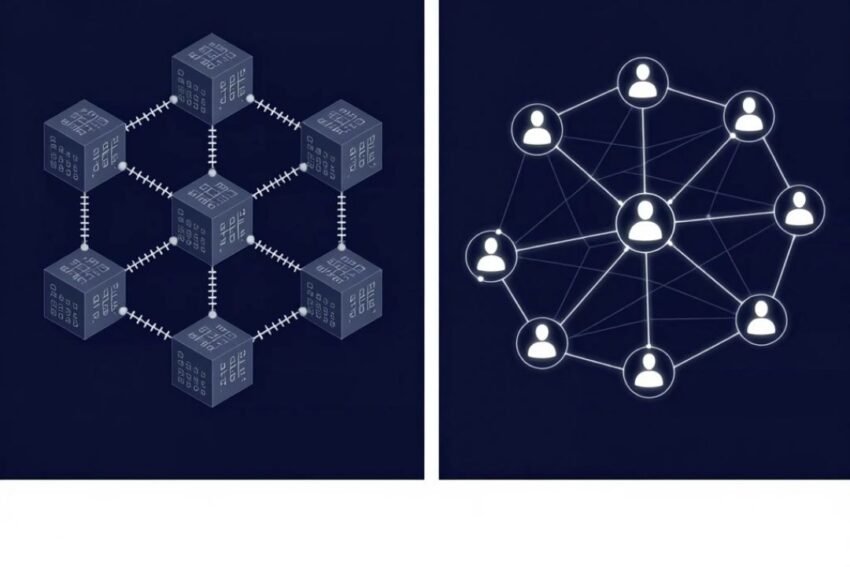
Blockchain is primarily a technology for creating distributed digital ledgers and programmable networks. Web3 is a broader concept that describes a more decentralized internet built using technologies such as blockchain, smart contracts, digital wallets, tokens, decentralized applications, and decentralized identity.
Understanding the difference between Blockchain vs Web3 is important for beginners, developers, businesses, and anyone interested in emerging technology.
Blockchain can provide the infrastructure that supports many Web3 applications, but blockchain technology can also be used for purposes that have nothing to do with Web3.
This guide explains the key differences between Blockchain and Web3, their benefits, applications, challenges, relationship, and future opportunities.
What Is Blockchain?
Blockchain is a distributed digital ledger technology that records transactions and other information across a network of computers.
Traditional databases are often controlled by a central organization. Blockchain networks can distribute records among multiple participants.
Information is generally organized into blocks that are connected chronologically.
Cryptographic techniques help protect records and transactions, while consensus mechanisms allow network participants to agree on the state of the ledger.
Blockchain technology can support:
- Digital currencies
- Smart contracts
- Tokenized assets
- Decentralized applications
- Supply-chain systems
- Digital identity
- Financial applications
- Data verification
Different blockchain networks use different architectures, consensus mechanisms, programming environments, and governance models.
What Is Web3?
Web3 is a broad concept describing a more decentralized internet.
Web3 applications can use blockchain technology to provide users with greater control over certain digital assets, identities, and interactions.
Common Web3 technologies include:
- Blockchain networks
- Smart contracts
- Digital wallets
- Tokens
- NFTs
- DeFi
- Decentralized identity
- Decentralized applications
- DAOs
- Decentralized storage
The exact definition of Web3 can vary.
Some people define Web3 primarily around blockchain-based applications, while others use the term more broadly for decentralized internet infrastructure and user-owned digital ecosystems.
Blockchain vs Web3: The Basic Difference
The simplest way to understand the difference is:
Blockchain is a technology.
Web3 is a broader ecosystem and vision that can use blockchain technology.
Blockchain provides infrastructure for recording information and executing programmable transactions.
Web3 uses blockchain and related technologies to build decentralized applications and digital services.
For example, a blockchain can exist simply as a distributed ledger.
A Web3 application could use that blockchain to provide decentralized trading, digital ownership, gaming, governance, or identity services.
Blockchain vs Web3 Comparison
| Feature | Blockchain | Web3 |
|---|---|---|
| Definition | Distributed ledger technology | Decentralized internet concept |
| Main purpose | Record and verify information | Build decentralized digital services |
| Core technology | Distributed ledger | Blockchain plus related technologies |
| Smart contracts | Often supported | Frequently used |
| Digital wallets | Can interact with wallets | Core user interface for many applications |
| Tokens | Can support tokens | Often used for ownership or access |
| dApps | Infrastructure for dApps | Major application category |
| DeFi | Underlying infrastructure | Major Web3 use case |
| NFTs | Technology for token records | Used for digital ownership |
| Identity | Can support identity systems | Decentralized identity is a Web3 concept |
| Governance | Network-specific | DAOs and community governance |
| Scope | More specific | Broader |
The two concepts overlap significantly, but their scope is different.
How Blockchain Works
A blockchain generally involves several important components.
Transactions
Users can initiate transactions to transfer assets or interact with applications.
Nodes
Network participants operate computers that help maintain or verify blockchain data.
Cryptography
Digital signatures and cryptographic hashes help protect the system.
Consensus
Consensus mechanisms allow participants to agree on valid transactions and network state.
Blocks
Transactions are grouped into blocks and added to the blockchain according to network rules.
This combination creates a distributed record that can be independently verified by network participants.
How Web3 Works
Web3 applications can combine multiple technologies.
A typical Web3 application may include:
- A blockchain network.
- Smart contracts.
- A digital wallet.
- A user interface.
- Decentralized or centralized supporting infrastructure.
- Tokens or digital assets.
A user may connect a wallet to a Web3 application and sign a transaction.
The smart contract then processes the transaction according to its programmed rules.
This allows users to interact with digital services without relying entirely on a traditional centralized account system.
However, not every component of a Web3 application is necessarily decentralized.
Smart Contracts: The Connection Between Blockchain and Web3
Smart contracts are one of the most important links between blockchain and Web3.
Smart contracts are programs that run on compatible blockchain networks.
They can automatically execute predefined instructions.
For example, a smart contract can:
- Transfer tokens
- Manage digital assets
- Process transactions
- Control voting
- Manage memberships
- Operate financial protocols
Smart contracts make blockchain programmable.
This programmability allows developers to create many Web3 applications.
However, smart-contract vulnerabilities can create significant security risks. Developers should test contracts carefully and consider professional security reviews.
Blockchain Applications
Blockchain technology has many applications that do not necessarily require a broader Web3 ecosystem.
Cryptocurrency
Blockchain can support digital currencies and tokens.
Supply Chains
Blockchain can provide shared records for supply-chain participants.
Asset Tokenization
Assets or contractual rights can potentially be represented through digital tokens.
Digital Identity
Blockchain can support certain identity and credential systems.
Recordkeeping
Organizations can explore blockchain for shared or verifiable records.
Financial Settlement
Blockchain can provide infrastructure for certain digital settlement processes.
These examples demonstrate that blockchain is broader than cryptocurrency or Web3.
Web3 Applications
Web3 focuses more heavily on decentralized digital experiences.
Decentralized Finance
DeFi applications use smart contracts to provide financial services.
NFTs
NFTs can represent individually distinguishable digital assets.
Decentralized Gaming
Blockchain can be used to represent certain gaming assets and ownership records.
Decentralized Social Networks
Web3 developers are exploring social platforms with portable identities and user-controlled assets.
DAOs
Decentralized Autonomous Organizations can use blockchain-based governance mechanisms.
Decentralized Identity
Web3 systems can explore new ways for users to control digital credentials.
Blockchain Benefits
Blockchain technology offers several potential advantages.
Decentralization
Distributed networks can reduce reliance on a single central database.
Transparency
Public blockchains can allow transaction records to be inspected.
Security
Cryptographic mechanisms can help protect transactions and records.
Programmability
Smart contracts can automate predefined processes.
Verifiability
Blockchain data can often be independently verified.
Digital Asset Infrastructure
Blockchains can support digital currencies, tokens, and other digital assets.
Web3 Benefits
Web3 can provide additional potential benefits.
User-Controlled Assets
Users can directly manage certain blockchain-based assets through digital wallets.
Digital Ownership
Tokens can represent digital assets, memberships, tickets, or other rights.
Open Applications
Public blockchain applications can be accessible without depending entirely on one centralized platform.
Programmable Services
Smart contracts can automate interactions between users and applications.
Portable Identity
Some decentralized identity systems aim to allow credentials or profiles to work across multiple services.
New Business Models
Tokenization and decentralized applications can create new digital business models.
Blockchain Challenges
Blockchain technology also has limitations.
Scalability
Some networks can experience congestion during periods of high demand.
Transaction Costs
Network fees can change depending on network design and activity.
Security
Smart contracts, wallets, bridges, and applications can contain vulnerabilities.
Regulation
Digital assets and blockchain systems operate within evolving legal frameworks.
Technical Complexity
Blockchain development requires specialized technical knowledge.
Web3 Challenges
Web3 faces many of the same challenges while introducing additional ones.
User Experience
Wallets, private keys, network fees, and blockchain transactions can be difficult for beginners.
Security
Users can lose assets through phishing, malicious contracts, or compromised credentials.
Privacy
Public blockchain transactions can create privacy concerns.
Governance
Decentralized governance can create complicated decision-making structures.
Adoption
Web3 applications need to provide clear benefits over traditional services.
Regulation
Legal treatment varies significantly between jurisdictions and applications.
Blockchain and Web3 Security
Security is essential for both technologies.
Users should:
- Protect private keys
- Keep recovery phrases confidential
- Use reputable wallets
- Verify transaction details
- Avoid suspicious websites
- Review smart-contract permissions
- Use strong authentication
- Keep software updated
- Research applications before using them
Developers should also use secure coding practices, testing, monitoring, access controls, and smart-contract audits where appropriate.
Because blockchain transactions can be difficult to reverse, security mistakes can have serious consequences.
Blockchain vs Web3 in Business
Businesses can use blockchain and Web3 in different ways.
A company may use blockchain for:
- Supply-chain tracking
- Digital records
- Payments
- Asset tokenization
- Verification
- Settlement
A company exploring Web3 may additionally develop:
- Digital asset marketplaces
- Token-based memberships
- Decentralized applications
- Community governance
- Blockchain-based loyalty systems
Businesses should identify a genuine problem before adopting either technology.
Blockchain is not automatically better than a traditional database, and Web3 is not automatically better than a centralized application.
The technology should match the business requirement.
Blockchain vs Web3 for Developers
Developers interested in blockchain can learn:
- Blockchain architecture
- Cryptography
- Consensus mechanisms
- Smart contracts
- Distributed systems
- Blockchain programming
- Wallet integration
Developers interested in Web3 may additionally study:
- dApp development
- Wallet connectivity
- Token standards
- DeFi protocols
- NFT systems
- Decentralized identity
- DAO governance
- Web3 user interfaces
Web3 development often combines blockchain development with traditional web technologies.
Blockchain vs Web3 and Digital Ownership
Digital ownership is one of the areas where Web3 has generated significant interest.
Blockchain can provide the underlying record of ownership.
Web3 applications can use that record to create:
- Digital collectibles
- Memberships
- Tickets
- Gaming assets
- Certificates
- Loyalty programs
However, ownership of a blockchain token does not automatically provide copyright ownership or ownership of a physical asset.
The rights attached to a token depend on the specific legal and contractual structure.
Blockchain vs Web3 and DeFi
DeFi demonstrates how blockchain can become an application platform.
Blockchain provides the infrastructure.
Smart contracts provide programmable financial rules.
Web3 interfaces allow users to interact with those systems.
DeFi applications can support:
- Trading
- Lending
- Borrowing
- Payments
- Liquidity
- Asset management
However, DeFi users should consider smart-contract risk, market volatility, liquidity risk, scams, and regulatory uncertainty.
Blockchain vs Web3 and AI
The relationship between AI, blockchain, and Web3 is becoming increasingly important.
AI can provide:
- Automation
- Data analysis
- Intelligent agents
- Natural-language interfaces
Blockchain can provide:
- Digital ownership
- Programmable transactions
- Decentralized records
- Token-based payments
Web3 applications can combine these capabilities.
Potential use cases include:
- AI agent payments
- Autonomous digital services
- Decentralized AI marketplaces
- Data provenance
- AI-powered dApps
- Machine-to-machine transactions
As AI agents become more capable, blockchain-based infrastructure could potentially provide programmable payment and ownership mechanisms.
Strong permissions and human oversight remain important for AI systems interacting with digital assets.
Blockchain and Web3 Scalability
Scalability is one of the most important technical issues.
Blockchain networks need to handle increasing numbers of transactions while maintaining security and decentralization.
Technologies such as Layer-2 networks can help process transactions more efficiently while relying on an underlying blockchain for certain security or settlement functions.
Other approaches include:
- Improved blockchain architectures
- Rollups
- Sharding
- Sidechains
- Specialized networks
- Better transaction processing
Improved scalability could make blockchain and Web3 applications more practical for mainstream users.
The Future of Blockchain
Blockchain technology is likely to continue developing in areas such as:
- Tokenization
- Digital payments
- AI infrastructure
- Enterprise applications
- Layer-2 scaling
- Zero-knowledge technology
- Digital identity
- Decentralized infrastructure
The technology may become increasingly integrated with traditional financial and digital systems.
The Future of Web3
Web3 may continue evolving toward practical applications rather than focusing primarily on speculation.
Future areas may include:
- User-controlled identity
- Digital ownership
- Tokenized assets
- AI agents
- Decentralized social platforms
- Blockchain gaming
- Digital payments
- Community governance
- Decentralized infrastructure
Improved wallets and simpler user interfaces could also make Web3 applications easier to access.
Which One Should Businesses Use?
There is no universal answer.
Businesses should evaluate the actual requirements of their project.
Blockchain may be appropriate when an organization needs:
- Shared records
- Decentralized verification
- Digital asset infrastructure
- Programmable transactions
- Multiple-party coordination
Web3 may be relevant when the goal involves:
- User-owned digital assets
- Decentralized applications
- Token-based ecosystems
- Community governance
- Portable digital identity
In many cases, businesses may use blockchain technology without adopting a complete Web3 model.
Frequently Asked Questions
Is Blockchain the same as Web3?
No. Blockchain is a technology for distributed records and programmable networks, while Web3 is a broader concept involving decentralized internet applications and services.
Is Web3 built on blockchain?
Many Web3 applications use blockchain technology, although the broader Web3 ecosystem can also involve other decentralized technologies.
Is cryptocurrency Web3?
Cryptocurrency is a major component of the blockchain ecosystem and can be used within Web3 applications, but cryptocurrency and Web3 are not identical.
What is the relationship between blockchain and smart contracts?
Smart contracts are programs that run on compatible blockchains. They allow blockchain networks to support programmable applications.
Is Web3 completely decentralized?
Not necessarily. Different Web3 applications have different levels of decentralization and may depend on centralized services for some components.
Which technology is more important: Blockchain or Web3?
They serve different purposes. Blockchain provides infrastructure, while Web3 represents a broader application and internet ecosystem.
Conclusion
Understanding Blockchain vs Web3 becomes much easier when their different roles are considered.
Blockchain is primarily a technology for maintaining distributed records, verifying transactions, supporting digital assets, and running programmable smart contracts.
Web3 is a broader vision of decentralized internet services that can use blockchain, smart contracts, wallets, tokens, decentralized identity, and decentralized applications.
Blockchain can exist without Web3. For example, an organization can use blockchain for recordkeeping or settlement without creating a Web3 application.
Web3, meanwhile, often depends on blockchain infrastructure to provide digital ownership, programmable transactions, and decentralized application functionality.
Both technologies offer potential benefits, including transparency, programmability, digital ownership, automation, and new business models. At the same time, scalability, security, privacy, usability, regulation, and adoption remain important challenges.
The future may not be about choosing Blockchain or Web3 as competing technologies. Instead, blockchain may continue serving as infrastructure while Web3 applications use that infrastructure to create new digital experiences.
Developments in AI, Layer-2 scaling, tokenization, decentralized identity, zero-knowledge technology, digital wallets, and blockchain security could further expand the capabilities of the ecosystem.
Blockchain provides the foundation, while Web3 represents a broader vision for how decentralized technologies can be used to build applications, digital economies, and online services.
Understanding this distinction can help businesses, developers, and users evaluate these technologies more effectively and identify practical opportunities in the evolving digital economy.