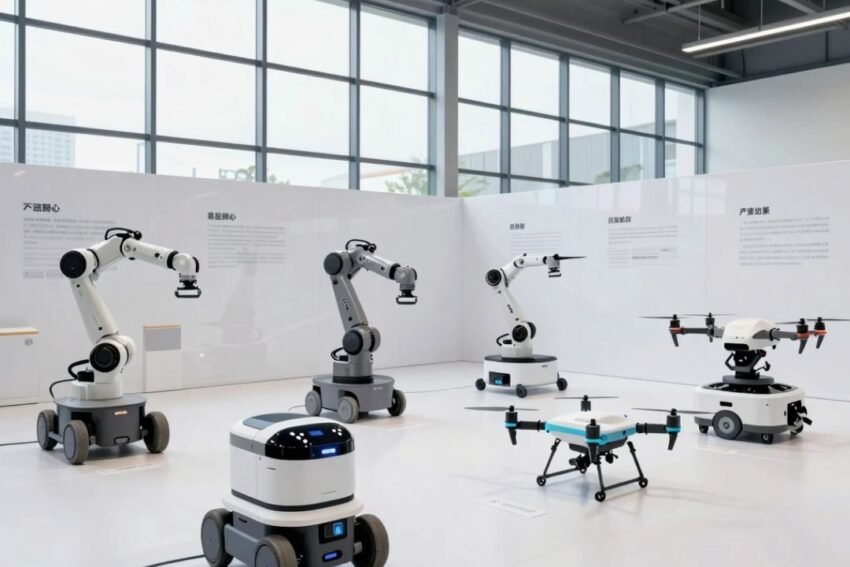
Introduction
Robotics and drones are among the most important technologies shaping the future of automation, manufacturing, transportation, agriculture, healthcare, logistics, and everyday life. Rapid developments in artificial intelligence, sensors, computer vision, batteries, connectivity, and software are making robots and drones more capable and useful across many industries.
Robots can perform physical tasks with different levels of automation, while drones are usually unmanned aircraft that can operate remotely or autonomously. Although these technologies are different, both can use AI, sensors, cameras, navigation systems, and advanced software to perform tasks more efficiently.
Businesses are increasingly exploring robotics and drones to improve productivity, reduce repetitive work, collect information, increase safety, and automate operations. Consumers are also using robotic vacuum cleaners, lawn-mowing robots, camera drones, and other smart machines.
However, robotics and drone technology also creates challenges involving cost, cybersecurity, privacy, safety, regulation, battery life, and workforce changes.
This guide explains robotics and drones, their types, applications, benefits, challenges, technologies, and future trends.
What Is Robotics?
Robotics is a field of technology focused on designing, building, programming, and operating machines that can perform physical tasks.
A robot can be controlled by software and may use sensors to understand its environment.
Robots can perform tasks such as:
- Manufacturing
- Assembly
- Welding
- Packaging
- Transportation
- Inspection
- Cleaning
- Surgery assistance
- Agriculture
- Warehouse operations
Some robots operate automatically, while others require human control or supervision.
Modern robots are increasingly combined with artificial intelligence to improve their ability to recognize objects, navigate environments, and make decisions.
What Are Drones?
Drones are unmanned aircraft systems that can be controlled remotely or operate with varying levels of autonomy.
They are commonly equipped with:
- Cameras
- GPS
- Sensors
- Flight controllers
- Communication systems
- Batteries
- Navigation software
Drones can be small consumer devices or large professional systems designed for industrial and specialized applications.
Common drone uses include:
- Photography
- Videography
- Agriculture
- Mapping
- Inspection
- Search and rescue
- Infrastructure monitoring
- Surveying
- Delivery research
Robotics vs Drones
Robotics and drones are closely related but serve different purposes.
Robotics primarily involves machines that interact with the physical environment, often on the ground or in controlled spaces.
Drones are generally flying machines designed to operate in the air.
Both technologies can use similar components, including AI, sensors, cameras, GPS, computer vision, and autonomous navigation.
In some advanced systems, drones can also be considered a type of robotic platform because they can perform physical tasks without a human directly controlling every movement.
Types of Robots
Robots can be classified into several categories.
Industrial Robots
Industrial robots are widely used in manufacturing.
They can perform:
- Welding
- Painting
- Assembly
- Packaging
- Material handling
Industrial robots can work continuously and perform highly repetitive tasks with consistent precision.
Collaborative Robots
Collaborative robots, often called cobots, are designed to work alongside humans.
They can assist with tasks such as:
- Assembly
- Inspection
- Packaging
- Machine operation
Cobots can provide flexibility for businesses that need automation while maintaining human involvement.
Mobile Robots
Mobile robots can move through different environments.
Examples include:
- Warehouse robots
- Delivery robots
- Autonomous vehicles
- Security robots
- Cleaning robots
Sensors and navigation software help these machines understand their surroundings.
Service Robots
Service robots are designed to assist people.
They can be used for:
- Cleaning
- Hospitality
- Customer assistance
- Healthcare support
- Education
Humanoid Robots
Humanoid robots are designed with human-like physical structures.
They may include:
- Two arms
- Two legs
- A torso
- A head or camera system
Humanoid robots are being explored for research, service, industrial, and other applications.
Types of Drones
Drones are also available in different designs.
Camera Drones
Camera drones are commonly used for photography and video production.
They can capture aerial images that would otherwise require helicopters or specialized equipment.
Racing Drones
Racing drones are designed for speed and maneuverability.
They are often used in competitive drone racing and recreational activities.
Agricultural Drones
Agricultural drones can help farmers monitor fields and collect information about crops.
Some systems can also support precision agriculture activities.
Mapping and Surveying Drones
These drones can capture aerial data for:
- Land surveys
- Construction
- Mapping
- Infrastructure planning
- Environmental monitoring
Industrial Drones
Industrial drones can inspect infrastructure such as:
- Bridges
- Towers
- Pipelines
- Power equipment
- Buildings
Using drones can reduce the need for workers to physically access certain difficult or hazardous locations.
How Robotics Technology Works
Robots typically combine hardware and software.
Important components include:
Sensors
Sensors allow robots to collect information about their environment.
Examples include:
- Cameras
- LiDAR
- Ultrasonic sensors
- Temperature sensors
- Force sensors
- Motion sensors
Processors
Processors analyze sensor information and run software instructions.
Actuators
Actuators allow robots to move.
They can control:
- Motors
- Wheels
- Arms
- Grippers
- Joints
Software
Software controls how the robot interprets information and performs tasks.
Advanced robots can use AI and machine learning to improve perception and decision-making.
How Drone Technology Works
Drones combine several technologies to remain stable and navigate through the air.
Important components include:
- Flight controllers
- Motors
- Propellers
- GPS
- Cameras
- Sensors
- Batteries
- Wireless communication
- Navigation software
The flight controller processes information from sensors and adjusts the motors to maintain stability.
Advanced drones can use computer vision and other navigation technologies to avoid obstacles and operate with less direct human control.
Artificial Intelligence in Robotics
Artificial intelligence is transforming modern robotics.
AI can help robots:
- Recognize objects
- Understand environments
- Navigate spaces
- Detect obstacles
- Predict maintenance requirements
- Learn from data
- Optimize movements
Computer vision is particularly important because it allows robots to interpret information from cameras and other sensors.
AI-powered robots can potentially perform tasks that require more flexibility than traditional programmable machines.
Artificial Intelligence in Drones
AI is also becoming important in drone technology.
AI-powered drones can potentially:
- Detect objects
- Track targets
- Avoid obstacles
- Identify locations
- Analyze images
- Navigate automatically
- Monitor environments
For example, an agricultural drone may use computer vision to analyze aerial images and identify areas of a field that require attention.
Robotics in Manufacturing
Manufacturing remains one of the most important applications of robotics.
Robots can perform repetitive and physically demanding tasks.
Benefits can include:
- Consistent production
- Improved precision
- Faster operations
- Reduced repetitive workloads
- Improved workplace safety
Modern factories increasingly combine robots with AI, sensors, industrial IoT, and cloud-connected systems.
Robotics in Healthcare
Robotics is also being explored across healthcare.
Applications include:
- Surgical assistance
- Rehabilitation
- Laboratory automation
- Hospital logistics
- Patient assistance
- Medical training
Medical robots are generally designed to support healthcare professionals rather than independently replace clinical judgment.
Safety, accuracy, regulation, and human supervision are especially important in healthcare robotics.
Drones in Agriculture
Agriculture is an important drone application.
Drones can help farmers collect aerial information about crops and fields.
Potential applications include:
- Crop monitoring
- Field mapping
- Irrigation assessment
- Plant health analysis
- Agricultural surveying
Drone imagery can provide farmers with information that may help identify problems earlier.
Drones for Infrastructure Inspection
Inspecting large infrastructure can be expensive and sometimes dangerous.
Drones can collect visual data from locations that may be difficult for humans to reach.
Potential inspection areas include:
- Bridges
- Solar installations
- Wind turbines
- Communication towers
- Buildings
- Industrial facilities
This can reduce the need for workers to physically access certain difficult areas.
Robotics in Warehousing and Logistics
E-commerce growth has increased demand for efficient warehouse operations.
Robots can assist with:
- Picking
- Sorting
- Moving packages
- Inventory management
- Warehouse navigation
Autonomous mobile robots can transport items between different locations inside warehouses.
Robotics can work alongside human employees to improve operational efficiency.
Drones and Delivery
Drone delivery is another emerging application.
Potential uses include:
- Medical supplies
- Small packages
- Food
- Emergency equipment
Drone delivery requires careful consideration of safety, airspace management, regulations, weather, battery limitations, and infrastructure.
Large-scale drone delivery therefore depends on both technological development and appropriate regulatory frameworks.
Robotics in Smart Homes
Robotics is becoming increasingly common in consumer products.
Examples include:
- Robotic vacuum cleaners
- Robotic lawn mowers
- Smart cleaning devices
- Home security robots
These devices can use sensors and mapping technologies to navigate homes and perform routine tasks.
Benefits of Robotics and Drones
Robotics and drones offer several potential advantages.
Increased Productivity
Machines can perform repetitive tasks efficiently.
Improved Precision
Robots can perform tasks with consistent movements.
Enhanced Safety
Machines can operate in environments that may be hazardous for humans.
Faster Data Collection
Drones can collect aerial information quickly.
Lower Operational Workloads
Automation can reduce repetitive manual activities.
24/7 Operation
Some automated systems can operate for long periods with limited human intervention.
Challenges of Robotics and Drones
These technologies also have important challenges.
High Initial Costs
Advanced robotic systems and professional drones can require significant investment.
Maintenance
Machines require regular maintenance, software updates, and component replacement.
Battery Limitations
Many drones have limited flight time because of battery capacity.
Cybersecurity
Connected robots and drones can potentially be targeted by cyberattacks.
Privacy
Camera-equipped drones and robots can collect sensitive information.
Regulation
Drone operations are subject to aviation and other applicable regulations.
Workforce Changes
Automation can change job roles and require workers to develop new technical skills.
Robotics and Drone Cybersecurity
Cybersecurity is becoming increasingly important as robots and drones become connected devices.
Potential security risks include:
- Unauthorized access
- Data theft
- Communication interception
- Malware
- GPS-related attacks
- Compromised software
- Stolen control credentials
Organizations should use strong authentication, encrypted communications, secure software updates, network segmentation, and regular security testing.
Robotics, Drones and the Internet of Things
Robots and drones can become part of the Internet of Things (IoT) ecosystem.
Connected machines can communicate with:
- Cloud platforms
- Sensors
- Databases
- Mobile applications
- Industrial systems
This connectivity can improve monitoring and automation.
However, every connected device can also create an additional security consideration.
Robotics and Drones in Business
Businesses can use robotics and drones for different purposes.
Potential applications include:
- Manufacturing
- Warehousing
- Agriculture
- Construction
- Inspection
- Logistics
- Security
- Retail
- Healthcare
Organizations should evaluate whether automation solves a genuine operational problem before investing in expensive technology.
The Future of Robotics and Drones
The future of robotics and drones will likely involve greater autonomy and intelligence.
Important developments may include:
- AI-powered robots
- Autonomous drones
- Humanoid robots
- Advanced computer vision
- Better batteries
- Collaborative robots
- Autonomous delivery
- Smart factories
- Robotic agriculture
- AI-powered inspection
- Swarm robotics
Robots and drones may increasingly work alongside humans rather than operate completely independently.
Autonomous Robotics
Autonomy is one of the most important areas of robotics research.
Autonomous robots can use sensors and AI to make decisions based on their surroundings.
Future systems may become better at:
- Navigation
- Object recognition
- Task planning
- Obstacle avoidance
- Human interaction
However, autonomous operation requires strong safety controls and appropriate human oversight.
Autonomous Drones
Future drones may require less direct control from human operators.
Autonomous drones could potentially perform:
- Mapping
- Monitoring
- Inspection
- Agriculture
- Search operations
- Environmental observation
Advanced navigation systems could allow drones to adapt to changing environments.
Safety and regulatory requirements will remain essential.
Robotics and Drones in 2026 and Beyond
As AI, sensors, batteries, processors, and connectivity improve, robotics and drones are likely to become more capable.
Businesses may increasingly combine robotics with:
- AI
- Cloud computing
- Edge computing
- IoT
- 5G
- Computer vision
- Digital twins
These technologies can allow machines to process information faster and coordinate with other systems.
How to Get Started With Robotics and Drones
Beginners interested in robotics can start with:
- Basic programming.
- Electronics.
- Sensors.
- Motors and controllers.
- Robotics kits.
- Computer vision.
- AI and machine learning.
- Robot operating systems.
Those interested in drones can learn about:
- Drone hardware.
- Flight controls.
- Navigation.
- Cameras and sensors.
- Drone software.
- Aerial photography.
- Mapping.
- Applicable local regulations.
Learning the fundamentals provides a stronger foundation than focusing only on individual devices.
Conclusion
Robotics and drones are transforming automation, manufacturing, agriculture, logistics, healthcare, inspection, entertainment, and many other industries.
Robots can perform physical tasks on the ground and in controlled environments, while drones provide flexible aerial capabilities for photography, mapping, monitoring, agriculture, inspection, and other applications.
Artificial intelligence is making both technologies increasingly intelligent. AI can help robots recognize objects, navigate environments, and optimize tasks, while drones can use AI for computer vision, obstacle avoidance, image analysis, and autonomous navigation.
Despite their benefits, robotics and drones face challenges involving cost, maintenance, battery life, cybersecurity, privacy, safety, regulation, and workforce changes.
The future is likely to involve more AI-powered robots, autonomous drones, collaborative machines, smart factories, robotic agriculture, advanced inspection systems, and connected autonomous devices.
As these technologies become more accessible, businesses and consumers will have new opportunities to automate tasks and improve productivity.
Ultimately, the growth of robotics and drones will depend on technological innovation, responsible deployment, cybersecurity, safety standards, and practical applications that provide meaningful value.
Robotics and drones are not simply machines of the future—they are increasingly becoming important tools for building a more automated, connected, and intelligent digital world.